Home >
Technical Activities
Technical Activities oversees the NTC Chapters and the Technical Committees.
The Technical Activities Committee is chaired by the Vice-President for Technical Activities and includes Chairs of all of the Technical Committees and the Chair of the Chapters and Regional Activities Committee of the Council.
See the Chapters page for information on the NTC Professional and Student Chapters and how to start a new one. See the Chapters and Regional Activities Committee page for Regional Chapter contacts.
NTC has a number of Technical Committees. See the Technical Committees page for committee descriptions and contacts.
The NTC Technical Activities Committee (TAC) is in charge of the coordination of NTC Technical Committees (TCs). The NTC TAC is chaired by the NTC VP TA and includes the Chairs of all TCs and the Chair of the Chapters and Regional Interest Groups. Working with the other NTC boards, the TAC focuses on the research content of the IEEE Nanotechnology Council, tracking technical developments and encouraging innovation in: applications, theory, models, metrics, experiments, architectures, products, initiatives, and other technical areas. Its Technical Committees form the core of the NTC’s functions, contributing to the NTC Publications, Conferences and Educational programs.
Technical Activities Committee Members
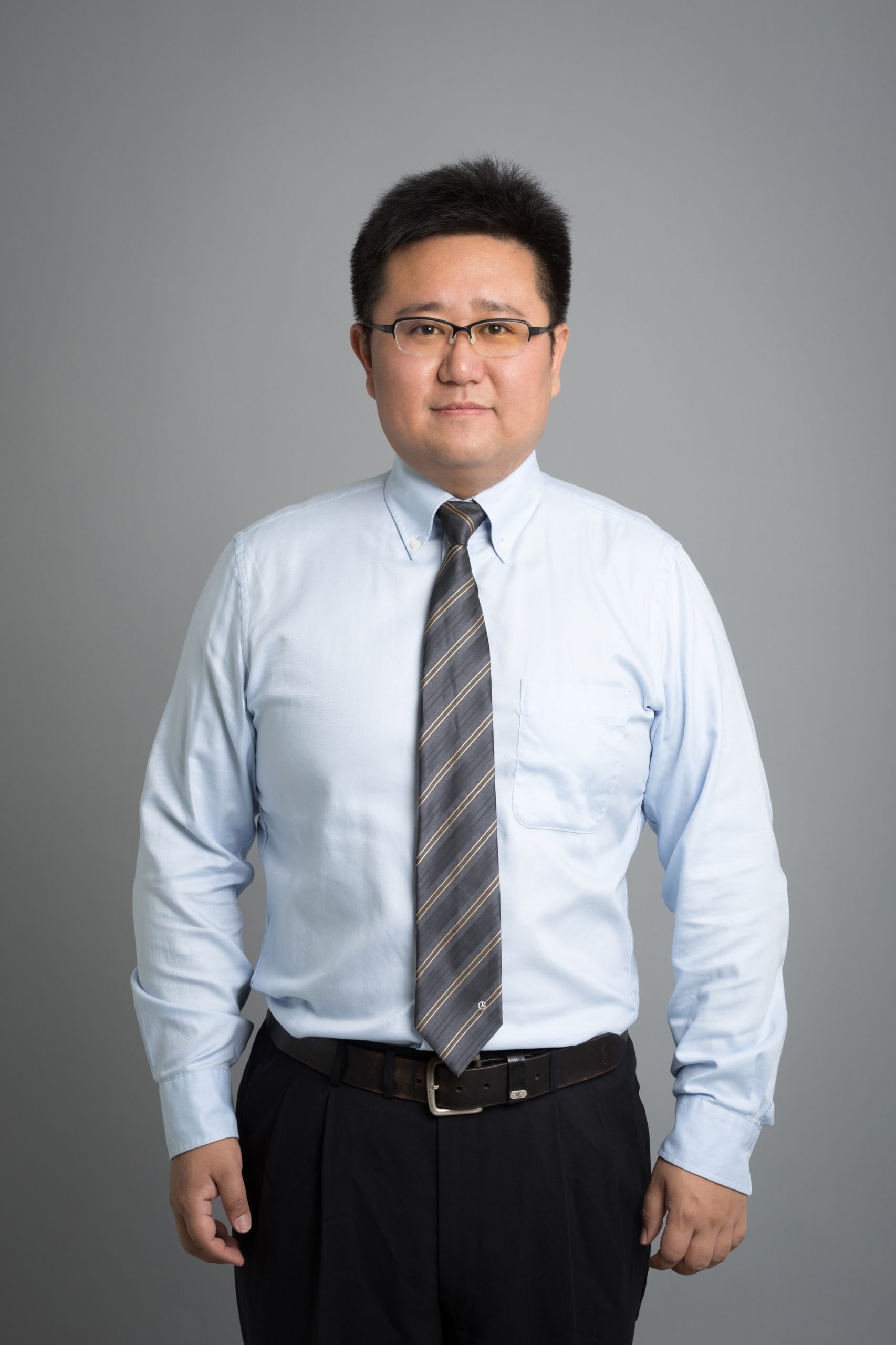
Weiqiang Li
Vice President Technical Activities
Weiqiang Liu is currently a Professor and the Vice Dean of College of Electronic and Information Engineering/College of Integrated Circuits, Nanjing University of Aeronautics and Astronautics (NUAA), Nanjing, China. He received the B.Sc. degree in Information Engineering from NUAA and the Ph.D. degree in Electronic Engineering from Queen’s University Belfast (QUB), Belfast, United Kingdom, in 2006 and 2012, respectively. His research interest mainly focuses on emerging computing nano ICs. He has published 2 research books by Springer and Artech House, over 190 leading IEEE journal and conference papers. His papers were selected as the Highlight Paper of IEEE Transactions on Circuits and Systems I: Regular Papers in the 2021 January Issue, the Feature Papers of IEEE Transactions on Computers in the 2017 December issue, and IET Computers & Digital Techniques Editor’s Choice Award in 2021. He received the prestigious Excellent Young Scientists Fund from NSFC in 2020 and listed in the Stanford University’s 2020 list of the top 2% scientists in the world.
Bio

Lan Fu
Chair of the Chapters and Regional Interest Groups
Lan Fu received her PhD degree from the Australia National University (ANU) in 2001 and is currently a Full Professor at the Research School of Physics, ANU. Prof. Lan Fu was the recipient of the IEEE Photonic Society Graduate Student Fellowship (2000), Australian Research Council (ARC) Postdoctoral Fellowship (2002), ARF/QEII Fellowship (2005) and Future Fellowship (2012). Professor Fu is a senior member of IEEE, IEEE/Photonics and Electron Devices Societies and was the past chair of the Photonics Society, Electron Devices Society and Nanotechnology Council Chapters of the IEEE ACT section. She is also the current member of the Australian Academy of Science National Committee on Materials Science and Engineering, Secretary of the Executive Committee of Australian Materials Research Society (AMRS), and Australian Research Council College of Experts. Lan Fu’s main research interests include design, fabrication and integration of optoelectronic devices (LEDs, lasers, photodetectors and solar cells) based on low-dimensional III-V compound semiconductor structures including quantum wells, self-assembled quantum dots and nanowires grown by metal-organic chemical vapour deposition (MOCVD).
Bio
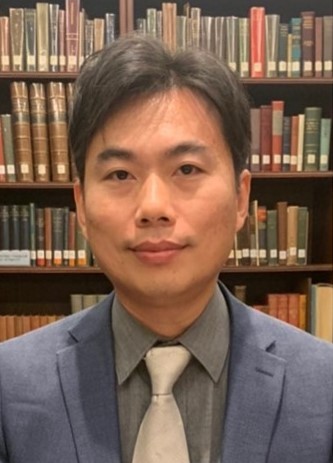
Kin Fong (Thomas) Lei
Chair TC 1: Nanorobotics & Nanomanufacturing
Dr. Kin Fong Lei is a Professor in Biomedical Engineering at Chang Gung University (CGU), Taiwan. Prior to joining CGU, he was a Lecturer at The Hong Kong Polytechnic University, Hong Kong (2007-2010). He received B.S. degree from National Tsing-Hua University, Taiwan (1998), and Ph.D. degree from The Chinese University of Hong Kong, Hong Kong (2005). In 2006, he was a post-doctoral fellow at the University of Western Ontario, Canada. Dr. Lei has made significant original contributions to research in Micro/Nano fabrication and Micro/Nano fluidics. He has published over 100 academic articles and was invited to contribute to 8 book/book chapters. Dr. Lei is a Fellow of the Royal Society of Chemistry (RSC), Fellow of the Institute of Physics (IOP), Senior Member of the Institute of Electrical and Electronics Engineers (IEEE), Member of the American Society of Mechanical Engineers (ASME), and Member of the Society for Laboratory Automation and Screening (SLAS). He serves as a Chair of IEEE-EMBS Technical Committee on Bionanotechnology and BioMEMS (BNM) in 2020 and Associate Editor at EMBS Conference Editorial Board in 2020. He also served as an organizing committee member for many IEEE conferences for MEMS/microfluidics researchers, e.g., IEEE-NEMS 2017 (Los Angeles), 2018 (Singapore), and 2019 (Bangkok). Dr. Lei is an Associate Editor for IEEE Access and IEEE Transactions on NanoBioscience, and Editorial Board Member for Scientific Reports.
Bio
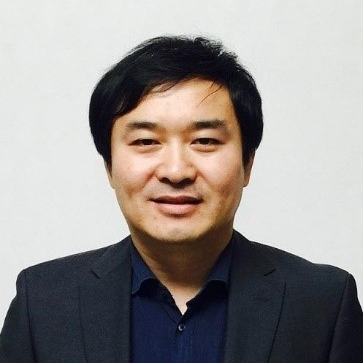
Haibo YU
Chair TC 2: Nano-Biomedicine
Dr. Haibo YU (于海波) is a full professor at the Shenyang Institute of Automation, Chinese Academy of Sciences. He received his BSc degree in Mechatronic Engineering and his MSc in Mechatronic Engineering from Yanshan University, China, in 2002 and in 2006, respectively. He received his PhD degree in Mechatronic Engineering from Shenyang Institute of Automation (SIA), Chinese Academy of Sciences (CAS) in 2012. From November 2009 to March 2012, he had studied in the Department of Back-end of Line of Fraunhofer ENAS as an exchange student in Germany, which was funded by the Joint Doctoral Promotion Programme promoted by the Chinese Academy of Sciences and Fraunhofer Gesellschaft. His research interests include: nanorobotics; mnno-material-based sensors; micro/nano-scale electrokinetics. He has served as an investigator for more than 5 grants from agencies such as Chinese National 863 Plan Projects, National Natural Science Foundation of China, and Chinese Academy of Sciences.
Bio
Xiaogan Liang
Chair TC 3: Nanofabrication
Dr. Xiaogan Liang is currently working as an Associate Professor at The Mechanical Engineering Department of University of Michigan (UM). Before joining UM, Dr. Liang was a Staff Scientist working at The Molecular Foundry, Lawrence Berkeley National Laboratory. His current research interests are focused on nanofabrication, nanomanufacturing, microsystem integration, nanoelectronics and optoelectronics based on low-dimensional nanostructures, biosensors, and microdrone sensors. Dr. Liang has coauthored 72 journal publications and >50 conference presentations, has given >30 invited presentations, and has 8 US patents. Dr. Liang is the recipient of NSF CAREER Award, and he is the member of Sigma Xi, IEEE, and ASME. Dr. Liang obtained a BS in Physics from Peking University, a MS in Condensed Matter Physics from Institute of Semiconductors, Chinese Academy of Sciences, and a Ph.D. in Electrical Engineering from Princeton University.
Bio
Alan Wang
Chair TC 4: Nano-Optics, Nano-Photonics, and Nano-Optoelectronics
Bio

Pramey Upadhyaya
Chair TC 5: Spintronics
Pramey Upadhyaya is an Assistant Professor of Electrical and Computer Engineering at the Purdue University. Before joining Purdue, Pramey was a postdoctoral scholar in the Physics and Astronomy Department, University of California Los Angeles, working under the mentorship of Prof. Yaroslav Tserkovnyak. He earned his bachelor’s degree in Electrical Engineering from the Indian Institute of Technology Kharagpur, India, in 2009, and the master’s and Ph.D. degree in Electrical Engineering department from the University of California Los Angeles, USA, in 2011 and 2015, respectively. During his Ph.D., he was a resident theorist in the experimental group (Device Research Laboratory) led by Prof. Kang Wang. His research has explored the theory of classical and quantum spintronic phenomenon and their device applications, enabled by electrical and thermal control of magnetism. Along with his teammates, this work has resulted in one of the earliest demonstrations of current-induced room-temperature skyrmion manipulations, spin torque switching by topological surface states and NV-center probing of spin-caloritronics. These works have resulted in over 30 publications in journals including Science, Physical Review Letters, Nature Nanotechnology, Nature Materials and Nature Communications. He is a recipient of NSF CAREER (2020), Qualcomm Innovation fellowship (2013) and Intel summer fellowship (2011).
Bio

Malgorzata Chrzanowska-Jeske
Chair TC 6: Nanoelectronics
Malgorzata Chrzanowska-Jeske is Professor of Electrical and Computer Engineering and Director of the VLSI & Emerging Technology Design Automation Laboratory at Portland State University. From 2004 to 2010 she was Chair of the ECE department at PSU, which she joined in 1989. She holds M.S. degree in electronics engineering from Politechnika Warszawska Warsaw, Poland, and the PhD degree in electrical engineering from Auburn University, Auburn, Alabama. Her research interests include CAD for VLSI ICs, MS-SOCs, 3D ICs, nanotechnology and nano/bio systems, design for manufacturability and design issues in emerging and renewable technologies. She has presented tutorials, keynote and invited talks at various international conferences and events. She has published more than 150 technical papers and serves as a panelist and reviewer for the National Science Foundation (NSF), and as a reviewer for National Research Council Canada (NRC) and many international journals and conferences. Her research has been supported by the NSF and industry. Dr. Chrzanowska-Jeske has served in various roles on the Technical, Steering, and Organizing Committees of many international conferences and workshops, as Associate Editor for TCAS II, Senior Editor, Associate Editor and Guest Editor of various international journals. Currently, she serves as Vice President for Finances of the IEEE Nanotechnology Council (NTC) and on Editorial Board of Nano Express, IOP Publishing. She served as IEEE NTC Vice President for Technical Activities and on BoG of IEEE CASS. She was a chair and a founding-member of Women in CAS Society, WiCAS. She presented keynote, plenary and tutorial lectures at various international conferences. She received 2008 Donald O. Pederson Best Paper Award in IEEE TCAD and the Best Paper Award for the best IEEE Transaction paper in Alabama Section in 1990 She is a Life Senior Member of IEEE.
Bio
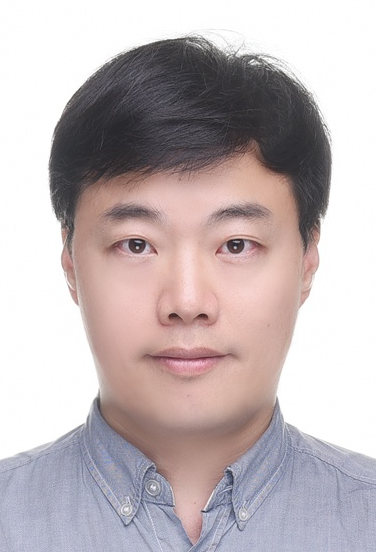
Inkyu Park
Chair TC 7: Nanosensors and Nanoactuators
Prof. Inkyu Park received his B.S., M.S., and Ph.D. from KAIST (1998), UIUC (2003) and UC Berkeley (2007), respectively, all in mechanical engineering. He has been with the department of mechanical engineering at KAIST since 2009 as a faculty and is currently a KAIST Endowed Chair Professor and Full Professor. Prior to joining KAIST, he was a research specialist at Berkeley Sensor and Actuator Center (BSAC) in 2007-2008, CTO & Co-founder of nPrintSolutions, inc. in 2008-2009, and visiting researcher at Hewlett Packard Laboratory in 2005-2008. His research interests are nanofabrication, smart sensors, nanomaterial-based sensors, flexible & wearable electronics, self-powered sensors, and sensors for environmental and healthcare monitoring applications. He has published more than 120 international journal articles (SCI indexed) and 160 international conference proceeding papers in the area of MEMS/NANO engineering (h index=38, total citation >7600). He is a recipient of IEEE NANO Best Paper Award (2010), HP Open Innovation Research Award (2009-2012), KINC Fusion Research Award (2016, 2018), Grand Prize of KAIST School of Engineering Research Innovation Award (2020), and Excellent Researcher Award from the Society of Micro/Nano-Systems (2020).
Bio
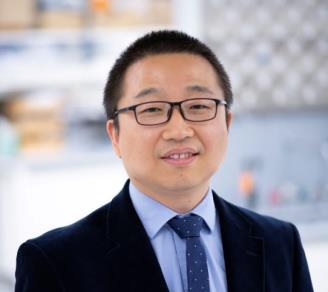
Wenzhou Wu
Chair TC 8: Nano-Materials
Dr. Wenzhuo Wu is the Ravi and Eleanor Talwar Rising Star Associate Professor in the School of Industrial Engineering at Purdue University. He received his BS in Electronic Information Science and Technology in 2005 from the University of Science and Technology of China, and his ME in Electrical and Computer Engineering from the National University of Singapore in 2008. Dr. Wu received his Ph.D. from Georgia Institute of Technology in Materials Science and Engineering in 2013. Dr. Wu’s research interests include the design, manufacturing, and integration of nanomaterials for applications in energy, electronics, optoelectronics, and wearable devices. He was a recipient of the Oak Ridge Associated Universities Ralph E. Powe Junior Faculty Enhancement Award in 2016, the IOP Semiconductor Science and Technology Best Early Career Research in 2017, American Society of Civil Engineers (ASCE) Sustainable Development Award in 2018, the Society of Manufacturing Engineers Barbara M. Fossum Outstanding Young Manufacturing Engineer Award in 2019, Journal of Materials Chemistry A Emerging Investigator in 2019, Advanced Materials Interfaces Hall of Fame in 2020, the ARO Young Investigator Award in 2020, the NSF Early CAREER Award in 2021, the Minerals, Metals & Materials Society (TMS) Functional Materials Division (FMD) Young Leaders Professional Development Award in 2022, a TMS Emerging Leader at the Emerging Leaders Alliance Conference in 2022, Microsystems & Nanoengineering (MINE) Young Scientist Award from Nature Publishing Group in 2022, Purdue College of Engineering Faculty Excellence Award for Early Career Research in 2022, Advanced Materials Technologies Hall of Fame in 2022, an invited participant at the 2022 China-America Frontiers of Engineering Symposium, an invited participant in the first U.S.-Africa Frontiers of Science, Engineering, and Medicine Symposium in 2022, Sensors Young Investigator Award in 2022, and an elected Fellow of Royal Society of Chemistry (FRSC) in 2022.
Bio
Peng Li
Chair TC 9: Nano-Metrology and Characterization
Li Peng received his BS degree in Automation from Sichuan University, Chengdu, China in 2009, and the Ph.D. degree in Mechanical and Electrical Engineering from Shenyang Institute of Automation, Chinese Academy of Sciences, Shenyang, China, in 2015. And then he worked as assistant professor in National Center for Nanoscience and Technology (NCNST), Beijing, China. He is currently an assistant professor at Beijing University of Technology (BJUT). His research interests center on micro/nanorobotics systems; scanning probe microcopy; precision instrument design; nanodevices and biosensors; and real-time design and integration.
Bio
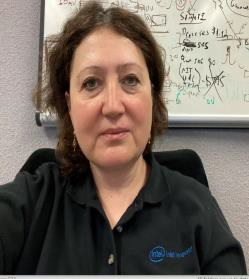
Roza Kotlyar
Chair TC 10: Modeling and Simulation
Roza received the Ph.D. in theoretical condensed matter physics from the University of Maryland, College Park, in 1998. Her thesis research was on coherently coupled quantum dot arrays. Roza was awarded in 1998 a two-year National Research Council Post-Doctoral Fellowship at the Naval Research Laboratory in Washington, DC, where she focused on the research of excitonic transitions in quantum wells, quantum wires and quantum dots. In 2000 Roza joined a Device Modeling Group at TCAD at Intel Corporation, Hillsboro, OR, as a Sr. CAD Engineer and later as a Staff Research Scientist. Roza played a key role in development of major transistor technologies to enable Complementary Metal Oxide Semiconductor (CMOS) scaling: stress, metal gate, and tri-gates. These innovations were the key drivers fueling the continuation of Moore’s law to achieve high computer power at low cost. Roza has worked on modeling of Intel quantum devices since the beginning of Quantum Computing program at Intel in 2016, and in 2020 Roza joined the Quantum Hardware group full time. Roza is the author of 55 papers in industry-leading journals, she has 30 patents. Roza led the industry-academia collaborations through her mentoring of Semiconductor Research Corporation (SRC), and she is a recipient of 2018 Mahboob Khan Outstanding Industry Liaison SRC Award. She served on the IEEE Brunetti Award committee, and on IRPS 2019-2020 Neuromorphic Committee, on the IEEE International Electron Devices Meeting (IEDM) modeling committee. Roza is a passionate advocate for science outreach initiatives and is participating in the US Q12 education partnership. Roza brought her device modeling experience at Intel and her quantum background to model Intel spin qubit devices, starting from bandstructure description, to Photo Your information may be shared with other areas within IEEE who seek volunteers. effective continuum modeling of devices, to many-body physics. Roza is the author of Intel quantum performance simulator which is used to understand Intel experiments and run quantum algorithms.
Bio
Bonyár Attila
Chair TC 11: Nanopackaging
Dr. Attila Bonyár is an associate professor and head of the Nanotechnology Laboratory at the Department of Electronics Technology, Faculty of Electronics Engineering and Informatics, Budapest University of Technology and Economics. He has two M.Sc. degrees in electrical engineering (2009) and biomedical engineering (2011), a Ph.D. (2014), and habilitation (2021) in electrical engineering. He co-authored 121 publications, including 50 journal papers. In the past decade, he received best/excellent paper/presentation awards at various (mostly IEEE) conferences 10 times. He was elected to serve in the Hungarian Academy of Sciences (HAS) Electron Devices and Electronics Technology Scientific Committee for two terms (in 2017 and in 2021).
Bio

Dustin Gilbert
Chair TC 12: Nanomagnetics
Dustin Gilbert is an Assistant Professor in the Materials Science and Engineering Department and Adjunct Professor of Physics at the University of Tennessee in Knoxville. His lab conducts research on a range of technologically-relevant nanoscale materials and phenomena including quantum materials, hard and soft magnetic materials, nanostructured materials, metamaterials, and biomedical devices. Currently, Gilbert’s lab focuses on the novel use of neutrons to investigate chiral spin textures, including magnetic skyrmions, under a DOE Career award, functional properties of high-entropy materials and nano-composite bioactive textiles. Before joining the faculty at the University of Tennessee, Gilbert was a Physicist and NRC Fellow at the National Institute for Standards and Technology Center for Neutron Research from 2014 to 2018 after earning his Ph.D. in Physics from the University of California, Davis. Gilbert has served as the co-chair of the IEEE Nanotechnology council sub-committee for Nanomagnetism for 2021-2022.
Bio
Zhan Yang
Chair TC 13: Nano Energy, Environment and Safety
Zhan Yang received his B.S., M.S., and Ph.D. from Harbin University of Science and Technology in Automation Engineering , Nagoya University (2010,2014) in Micro-Nano System Engineering respectively. He has been an associate professor with the School of mechanical and electrical engineering and Center of Robotics and Microsystem at Soochow University since 2013. He is NTC Adcom Member, Member Representative, Robotics & Automation Society (RA) in 2017,2018 and 2020. He has been serviced as workshop Chair of IEEE NANO 2017, Publicity Chair of IEEE NANO 2019, Program Co-chair of IEEE NEMS 2019. His research interest are nanorobotics, nanomanipulation and CNT based-nanodevices. He has published more than 50 papers supported by National Science Funding of China and Key Research Program of China. He is the Secretary General of Nano Robotics Society of China.
Bio
Lin Lin
Chair TC 14: Nanoscale communications
Lin Lin is an Associate Professor in the College of Electronics and Information Engineering at Tongji University, Shanghai, China. He received his B.Eng. and M.Eng. degree from Tianjin University, China in 2004 and 2007, respectively, and received the Ph.D. degree from Nanyang Technological University, Singapore in 2012. He was an EU Marie Curie Fellow at the University of Warwick, UK. His research interests include molecular communication, neural communication, and internet of nanothings. He hosted the 1st China-Germany Molecular Communication Workshop in 2019. He served as the TPC co-chair of BICT 2020 and Workshops Chair of BICT 2021. Lin is currently the Chair of the IEEE Molecular, Biological, and Multi-Scale Communications Technical Committee.
Bio

James Spicer
Chair TC 15: Nano-acoustic devices, Processes and Materials
James Spicer is a professor of Materials Science and Engineering at The Johns Hopkins University in Baltimore, Maryland. He is the chair of Materials Science and Engineering Program in the Engineering for Professionals Program and is a member of the Principal Professional Staff at The Johns Hopkins Applied Physics Laboratory. His research focuses on laser-material interactions for advanced processing and materials characterization including ultrafast studies of nanoscale thermal and acoustic transport, polymer matrix nanocomposite processing and characterization, optical and ultrasonic characterization of additively manufactured materials, development of opto-thermal barrier coatings for space probes and characterization of high-energy laser materials. He is a member of the IEEE Nanotechnology Council, the IEEE Ultrasonics, Ferroelectrics and Frequency Control Society and the IEEE Sensors Council. He is also a member of ASME, OSA, MRS and APS.
Bio
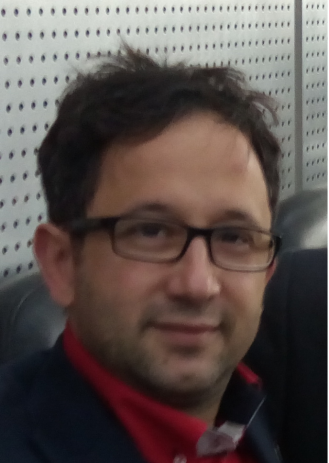
Giovanni Finocchio
Chair TC 16: Quantum, Neuromorphic, and Unconventional Computing
Giovanni Finocchio is Associate Professor of Electrical Engineering at University of Messina, Italy. He got his PhD (XVIII cycle) in “Advanced Technologies for Optoelectronics, Photonics and Electromagnetic Modeling”. Coordinator at the University of Messina for the SpintronicFactory (http://www.spintronicfactory.eu/). GF is co-authors of more than 180 papers (h-index 33 and > 3400 citations) published in well-established international journals including 2 Nature Communications, 3 Nature Electronics and 1 Advanced Materials. GF was co-inventor of 5 patents, co-founder of two spin-off companies. GF has organized as chair, co-chair or member of the scientific committee several conferences (magnonics, hysteresis modeling and micromagnetics (HMM)) and he also co-organized more than 10 workshops in Messina. GF is regularly invited at international conferences in magnetism and spintronics, he gave more than 70 invited talks at conferences, universities and industries. Currently, GF has more then 10 active international collaborations on different topics in the field of applied magnetism and spintronics. Since 2019, GF is chair of the Italy Chapter of the IEEE Magnetics Society. In 2020 the chapter was awarded as “Best Chapter” from IEEE Italy section. GF is an elected member of the AdCom of the IEEE Magnetics Society for the years 2020-2022. Since 2013, steering committee member of the HMM conferences (Hysteresis Modeling and Micromagnetics), GF was chair of the committee from 2015 to 2019. President of the PETASPIN association which main missions are to support scientific research in many fields of engineering and applied physics, particularly in the field of magnetism, and to disseminate scientific results through conferences and meetings, also organized in collaboration with other institutions and associations. PETASPIN has more than 12000 contact of people working in magnetism and related field and has organized several events and virtual activities (https://www.petaspin.com/).
Bio
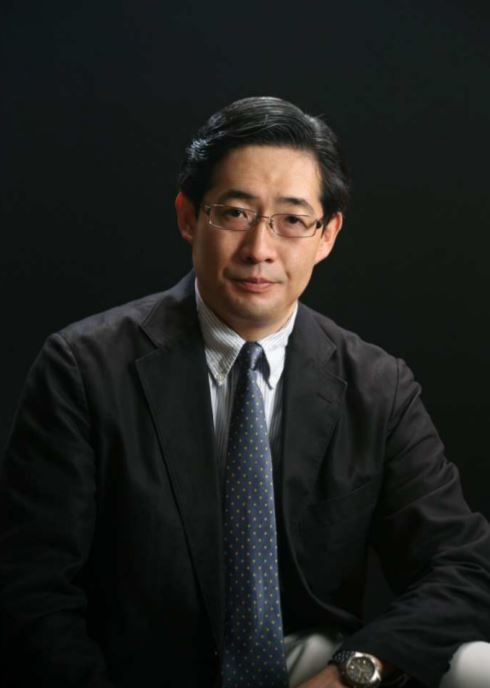
Seiji Samukawa
Chair TC 17: Emerging Plasma Nanotechnologies
Seiji Samukawa joined NEC in 1981 after graduating in Instrumentation Engineering from Keio University. Worked on the research and development of ultra-precise plasma etching processes for ULSI devices. Promoted to Principal Researcher in Microelectronics Laboratory, R&D Group NEC Corporation. Obtained a Ph.D. in Instrumentation Engineering from Keio University in 1992. Prof Samukawa, early in his career at NEC in Japan, recognized the importance of developing plasma processing technologies that mitigated process related device damage. His first major contribution addressed the requirement for ultralow plasma potentials and electron temperatures along with superior species flux uniformity to reduce damage. This contribution foretold the emergence of what is today’s ultrahigh frequency plasma sources, capacitively coupled VHF and microwave-based that are critical for damage-free plasma processing. Since July 2000, he has been a full professor at Tohoku University, an institution renowned for contributions to damage-free process and leading edge device technology, where he is currently Director of the Innovative Energy Research Center at the Institute of Fluid Science (IFS) Tohoku University. He is also a Principal Investigator (PI) at Advanced Institute of Materials Research (AIMR) Tohoku university, deputy director of Material Solutions Center (MaSC) Tohoku university, Joint appointment Fellow of National instituite of advanced industrial science and technology (AIST) and also Chair Professor of National Chiao Tung University (Taiwan). The trend in research at the time was the manipulation of plasmas using magnetic fields, negative ion extraction to minimize the impact of charge imbalances in features and energetic species on devices. Prof. Samukawa, rather than rushing into the fray, took a careful diagnostics-based approach. He first characterized the impact of different kinds of radiation on the device results. New plasma pulsing technology was matched to the core issues he identified. His original patents for plasma pulsing technology are key references for much of the patented plasma pulse technology that has followed. Pulse-time-modulated plasma etching and nitridation systems have been widely introduced into mass-production lines for sub-90 nm generation devices. Now, 50 percent of all plasma etch systems include pulse-modulated plasma functions. According to the latest information, going forward pulse-modulated plasma associated technologies are expected generate nearly a few billions $ in revenue per year. Always ahead of the curve, in 2000, Prof. Samukawa demonstrated damagefree top-down etching using a newly developed neutral beam etching system. Neutral beam etching is the ultimate goal for nanofabrication to achieve charge-free and UV photon irradiation damage-free processes. He was the first to demonstrate that neutral beams can be efficiently generated by the Your information may be shared with other areas within IEEE who seek volunteers. acceleration of negative ions in pulsed plasmas followed by their neutralization. With this method, he generated high-density, low-energy neutral beams with neither charged particles nor UV photons incident onto the substrate surface; and demonstrated damage-free etching, oxidation and deposition for sub-22 nm Si fin-FETs, damage-free etching and oxidation for sub-10nm Ge fin-FETs, and damage-free gate recess etching for high-frequency noise performance of Al2O3/AlGaN/GaN MOS HEMT. Combining biotechnology with neutral-beam-based nano-processes, i.e., bio-nano templating processes, he fabricated sub-10 nm diameter and high-density nano-disk array structures (Si, InGaAs, InGaN and 2D materials). The quantum effects of these structures were demonstrated at room temperature due to the damage-free etched surfaces made possible by neutral beam etching. Also relying on Si and InGaN nanodisk structures, he is developing quantum dot (QD) solar cells with high energy conversion efficiencies of more than 45% and QD Green LED with high internal quantum efficiencies. His significant scientific achievements earned him Ichimura Award (2008) in the New Technology Development Foundation, Prizes for Science and Technology; The Commendation for Science and Technology by the Minister of Education, Culture, Sports, Science and Technology (2009), Plasma Prize in American Vacuum Society (2010) and IEEE NTC Distinguished Lecturers (2019). Additionally, he has been elected as a “Distinguished Professor” of Tohoku University, a “Fellow” of the Japan Society of Applied Physics (JSAP) since 2008, a “Fellow” of American Vacuum Society (AVS) since 2009 and a also “Fellow” of Institute of Electrical and Electronics Engineers (IEEE) since 2018.
Bio



 | Share: